Jaguar XJ6 4.2 Series 1 1970 review
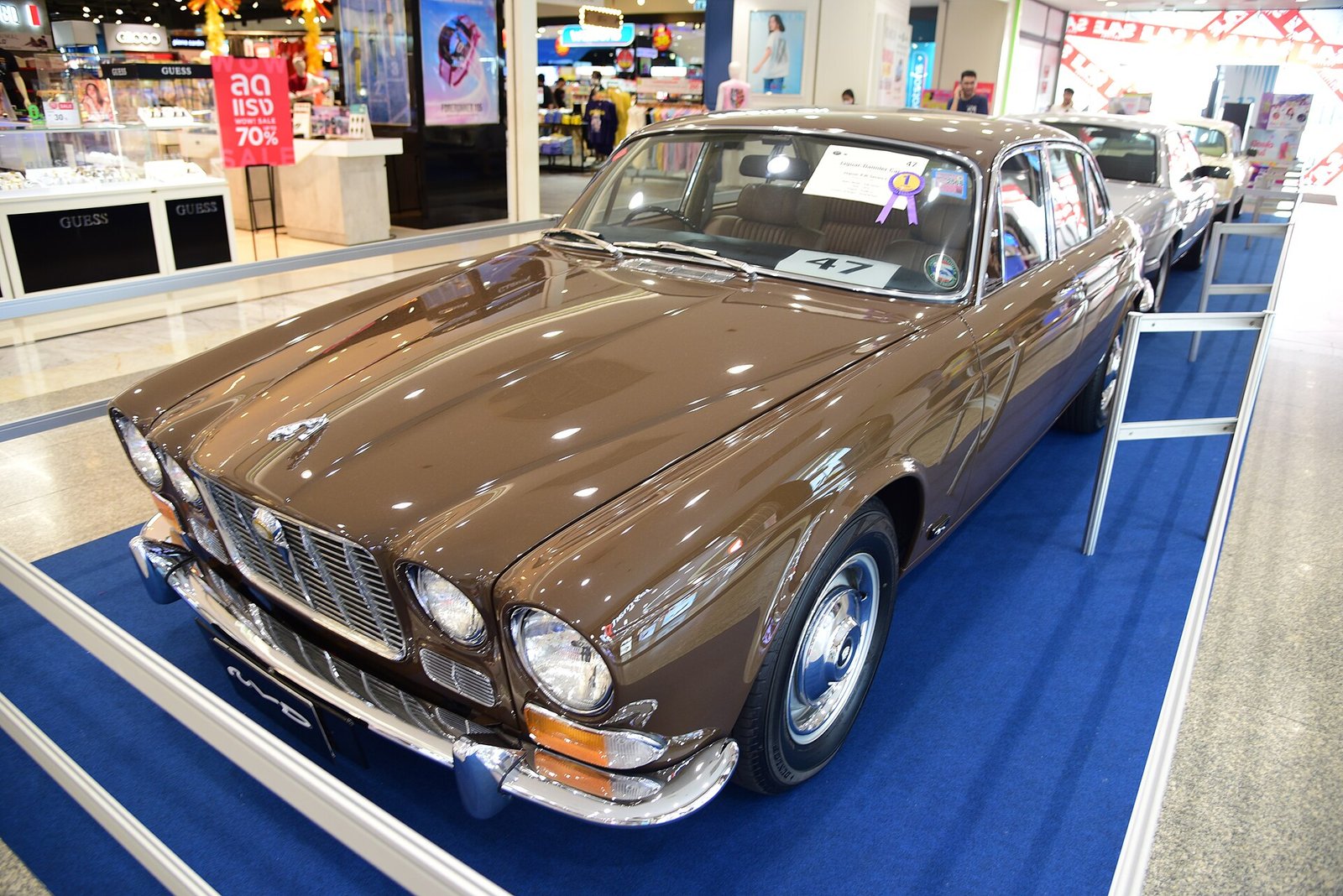
Photo: Coolalabright (CC BY 4.0), via Wikimedia Commons
Overview
Buying a Series 1 XJ6 is a decision about bodywork, not badges. Hagerty UK puts a 4.2 at £3,900 in fair condition, £6,500 in good condition, £10,200 in excellent condition and £22,800 for concours, yet a full body restoration alone can cost £30,000, so a cheap rough car is the most expensive one you will ever buy. Pay for a specialist inspection that lifts carpets and checks sills, floors and bulkhead, and budget for fuel — a 4.2 returns roughly 16 mpg from its twin 45.5-litre tanks. The car is MOT-exempt and qualifies for free historic-vehicle tax once in the historic class, provided it has not been substantially changed. Mechanical parts are plentiful through the Jaguar specialist network; rust repair is where the money goes.
The Series 1 XJ6 is the car that made Jaguar - Sir William Lyons' masterpiece, launched in 1968 to universal acclaim. With its 4.2-litre XK six, all-round independent suspension and a cabin trimmed like a gentleman's club, it was quite simply the best saloon in the world.
Today the Series 1 is the purist's XJ: slim chrome bumpers, the original low roofline and none of the later clutter. It offers 120 mph wafting for the price of a used Fiesta, though you will want a specialist on speed dial.
Related reviews: Jaguar E Pace 2024 review · Jaguar E Type 1965 review · Jaguar F Pace 2024 review
UK price from: £8,750
Specifications
| Engine | 4.2-litre inline-6 (4,235 cc) |
| Power | 245 bhp @ 5,400 rpm |
| Torque | 283 lb-ft @ 3,750 rpm |
| 0-60 mph | 9.2 seconds |
| Top speed | 124 mph |
| Fuel economy | ~16 mpg |
| Transmission | 4-speed manual or 3-speed auto |
| Drive | Rear-wheel drive |
| Production years | 1968-1973 (Series 1) |
| Kerb weight | 1,770 kg |
| Fuel tank capacity | 91 litres (twin 45.5-litre tanks) |
| Length | 4,813 mm (189.5 in, short wheelbase; LWB 4,915 mm) |
| Width | 1,772 mm (69.75 in) |
| Production total (XJ6 4.2) | 59,651 (59,077 short wheelbase + 574 long wheelbase) |
Features
- 4.2-litre XK straight-six with 245 bhp
- All-round independent suspension for a magic-carpet ride
- Walnut and leather cabin - pure 1960s luxury
- Slim chrome bumpers unique to the Series 1
- Four-speed manual with overdrive or Borg-Warner automatic
- Hailed as the finest production car in the world at launch
Common parts & prices
| Part | Price (GBP) | Notes |
|---|---|---|
| Front brake pad set | £45 | Standard road pads |
| Rear brake disc pair | £80 | Inboard rear discs, per pair |
| Exhaust middle and rear sections | £350 | Mild steel system |
| Water pump | £95 | XK engine cooling service item |
| Front ball joint pair | £40 | Suspension wear item |
| SU carburettor rebuild kit | £85 | Per pair of carbs |
Pros
- Enormous car for the money - true luxury-car presence
- Superb ride comfort that embarrasses modern saloons
- Straight-six soundtrack and effortless torque
- Series 1 values are finally waking up
Cons
- Rust in sills, floors, wings and rear suspension mounts
- Cooling and electrics need vigilant maintenance
- 16 mpg - budget for fuel as well as maintenance
- Manual and overdrive cars are rare - most are automatics