Isofix Car Seats UK: How to Check & Fit One Safely
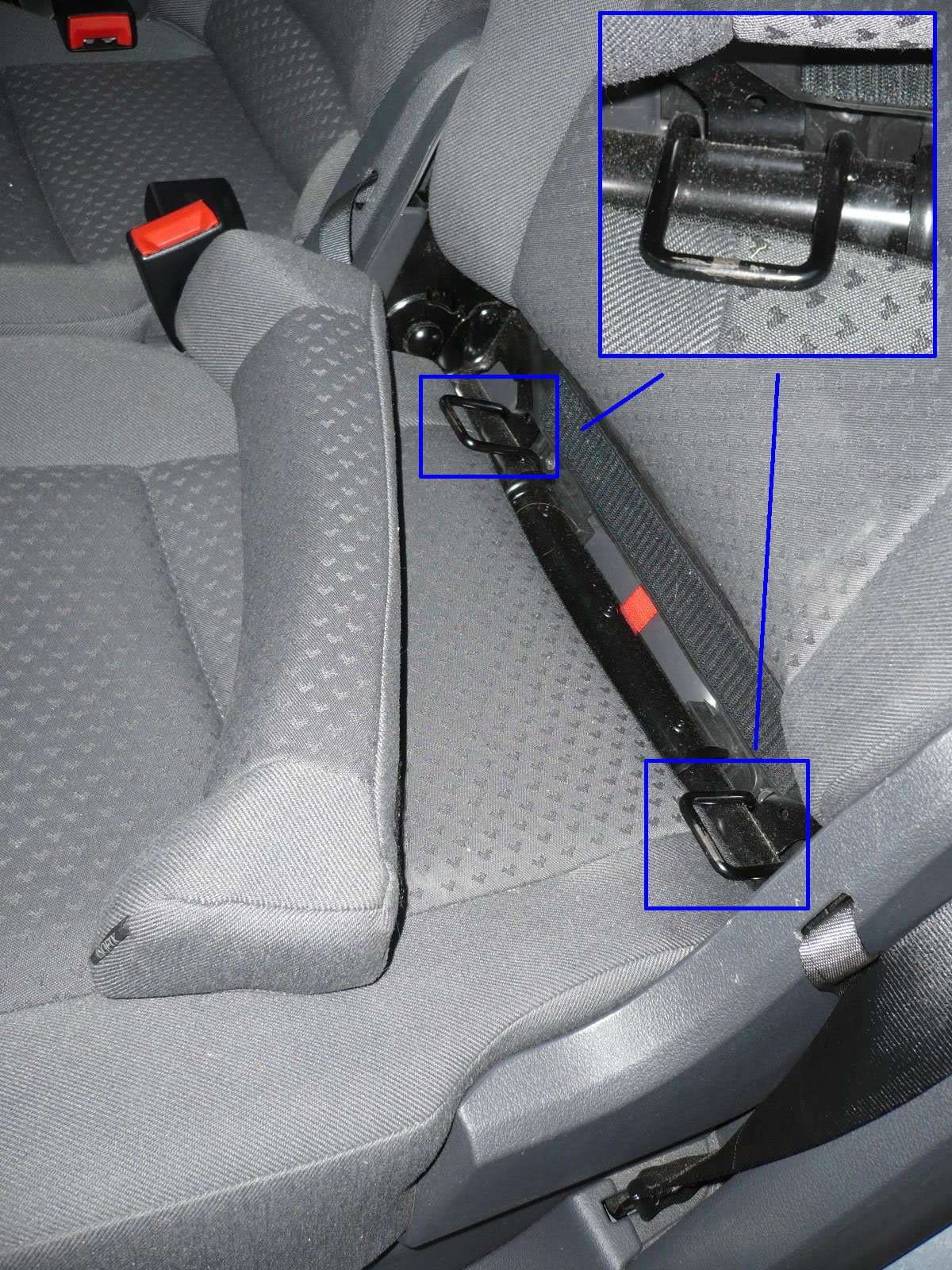
Isofix is the international standard (ISO 13216) for child-seat anchor points in passenger cars. The two lower anchors sit 280 millimetres apart in the gap where the rear seat cushion meets the backrest, and a compliant seat's rigid connectors clip straight onto them. Every Isofix seat also needs a third point of contact to stop it rotating forward in a crash: a support leg braced against the car floor, or a top tether strap clipped to a dedicated anchor behind the rear seat. A belt-fitted seat can be safe when fitted correctly; Isofix's advantage is that it takes most of the guesswork out, so far fewer seats end up fitted wrong.
The law is simpler than most parents fear. In the UK, children must normally use a child car seat until they are 12 years old or 135 centimetres tall, whichever comes first — after that, an adult seat belt is the requirement. If a child under 14 is not in the correct restraint, the driver can be fined up to £500. Seats come in two approved families: height-based R129 (i-Size) seats, rear-facing until the child is over 15 months, and older weight-based R44 seats, grouped from birth to 36kg. New R44-only seats have not been sold in the EU since September 2024, so anything you buy new today is R129. Which? recommends keeping children in a seat until 150 centimetres — an adult belt does not sit correctly on a shorter child.
So does your car have Isofix? If it was built from around 2014 onwards, almost certainly yes. Under UN/ECE Regulation 14, all new vehicles produced since February 2013 must have Isofix lower anchorages and top tether attachments. Check in three places. First, look for the label: a small fabric tag or button on the rear seat back showing the word Isofix or a diagram of a child in a seat. Second, feel in the gap between the seat cushion and the backrest — you should find two metal U-shaped loops about 28 centimetres apart, sometimes hidden behind a small plastic flap. Third, check the handbook under safety or child restraints, which lists exactly which seating positions have anchors. Expect them on the outer two rear seats only — the centre rear seat very rarely has Isofix.
Fitting the seat properly takes two minutes once you know the routine. Check the seat maker's vehicle fitting list first — not every Isofix seat is approved for every Isofix car. Slide the connectors in until both click and both indicators turn green, then give the seat a firm tug: it should move no more than about an inch. Then deal with the third point of contact. If your seat has a support leg, extend it until it stands firmly on a solid part of the floor with its indicator green — never over an underfloor storage compartment lid, which can collapse in a crash. If it has a top tether, pass the strap over the backrest, clip it to the designated anchor and pull it tight — never to a luggage hook or a head restraint, which are not strong enough. Finally, do the harness pinch test: tighten the straps until you cannot pinch any webbing at the shoulder, and take bulky winter coats off first — a coat compresses in a crash and leaves the harness loose.
Five mistakes catch parents out again and again. A loose installation is the first: if the seat rocks more than an inch, it is not in properly. The second is forgetting the support leg or top tether altogether — without it, the seat can rotate forward in a frontal impact. The third is the support leg standing on a storage-compartment lid, which looks solid but is not. The fourth is turning a child forward-facing too early: keep them rear-facing for as long as the seat allows, at least to 15 months and ideally much longer. And the fifth is buying a second-hand seat from a stranger. A used seat can look perfect and still carry hidden damage from a crash, be missing parts, or be past its safe life of roughly six to ten years — only take one if you know its full history.
If you are buying a family car, check the Isofix points on the viewing, ideally with your own seat in the boot. Three sets matter if you have three children. Family favourites on this site all come with Isofix as standard: the Nissan Qashqai https://drivepedia.site/car/nissan-qashqai-2024, the Skoda Karoq https://drivepedia.site/car/skoda-karoq-2024 and the Kia Sportage https://drivepedia.site/car/kia-sportage-2024, and the Ford Kuga https://drivepedia.site/car/ford-kuga-2021 is a strong used buy with sliding rear seats that make room for a bulky rear-facing seat. Once you have a shortlist, run it through our Smart Car Finder https://drivepedia.site/tools/finder and check what each car really costs to run — the Isofix check takes two minutes.
Q: Does my car have Isofix?
A: If it was built from around 2014 onwards, almost certainly yes — Isofix anchorages have been required on new vehicles produced since February 2013, and most European cars from 2006 onwards had them. Look for a small Isofix label on the rear seat back, feel for two metal loops in the gap between the seat cushion and backrest, or check the handbook. The outer two rear seats are the usual positions.
Q: Is Isofix safer than fitting a seat with a seat belt?
A: A correctly fitted belt-installed seat is safe. Isofix's advantage is consistency: rigid clips and green indicators make a correct fit much easier to achieve, and the system was designed specifically to cut installation errors, which are the biggest real-world risk with child seats.
Q: Can I fit an Isofix seat in the middle rear seat?
A: Usually not — Isofix anchors are fitted to the outer two rear seats on almost every car, and the centre position very rarely has them. Check your handbook: a few MPVs and larger cars do offer three sets. If the centre has no anchors, fit the seat on an outer position instead.
Q: Do I need a support leg or a top tether as well?
A: Yes — one of them is mandatory, not optional. The two lower anchors alone cannot stop the seat rotating forward in a crash, so every Isofix seat with its own harness specifies either a support leg braced on a solid floor or a top tether clipped to its designated anchor. Never use both a support leg and a top tether unless the manual says so, and never fit an Isofix seat with a seat belt at the same time unless the manual specifically instructs it.
Q: Can I buy a second-hand Isofix seat?
A: Only if you know its full history. A used seat can hide crash damage you cannot see, be missing parts or instructions, or be past its safe life of roughly six to ten years. Take one from a trusted family member who can confirm it has never been in an accident — never buy one from a stranger.
Image: Tetris L, Wikimedia Commons (CC BY-SA 3.0).