Winter Tyres in the UK: Do You Need Them?
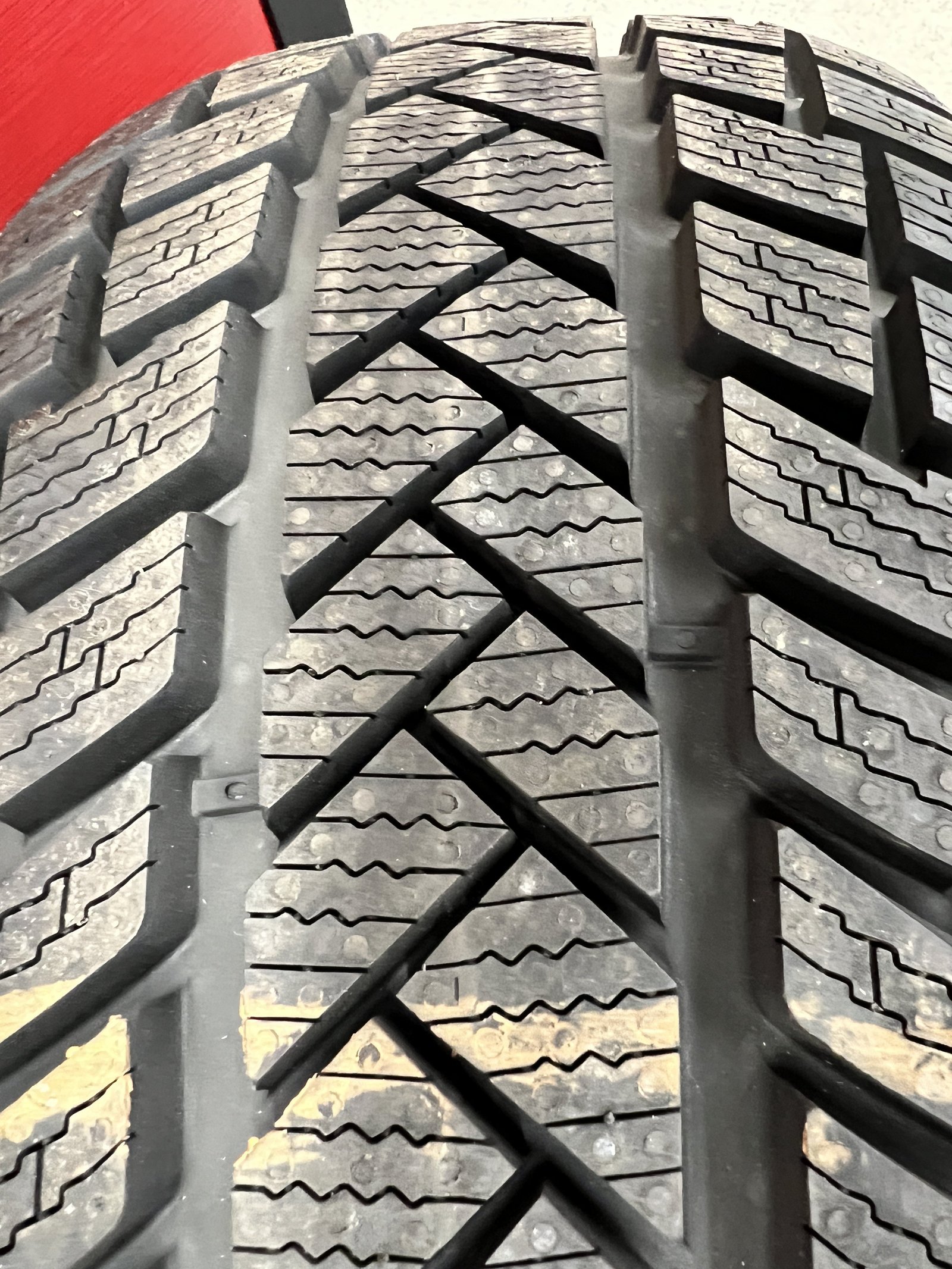
Every October, British drivers ask the same question as the nights draw in: are winter tyres worth it here? Britain gets slush and black ice more often than deep snow, yet frosty roundabouts still catch drivers out every year.
Are winter tyres a legal requirement in the UK?
No. Unlike Germany and Austria, the UK has no law forcing you onto winter tyres in the cold months — you can legally run summer tyres all year. But legal and sensible differ: below about 7°C, summer-tyre rubber hardens, lengthening braking distances even on dry roads. In Britain that cold window runs roughly October to March, which is exactly what winter tyres are made for.
How winter tyres actually work
It is mostly chemistry. Winter tyres use a softer compound that stays flexible in the cold, so the tyre keeps gripping the road instead of skating across it, while deeper grooves and tiny slits called sipes bite into slush and clear water faster.
Look for the three-peak mountain snowflake symbol (3PMSF) on the sidewall — the mark of a tyre tested to a genuine winter standard. 'M+S' (mud and snow) alone is only a tread-pattern claim.
All-season tyres: the British compromise
For most of the UK, all-season tyres are the honest answer. They carry the 3PMSF mark, cope with light snow, and stay on all year — no storage or seasonal swap. The trade-off is compromise: softer than ideal in July, less grippy than a dedicated winter in January. If you rarely see lying snow, all-seasons are arguably the smartest money you will spend.
Who in the UK actually needs dedicated winters?
Consider a second set if you live where proper snow falls; commute on untreated rural roads; drive high winter mileage; or drive a rear-wheel-drive car, where the traction advantage is most dramatic. Anyone who simply cannot afford to be stuck should weigh them up too.
Even a 4x4 is not exempt. Four-wheel drive helps you pull away but does nothing for braking or cornering — the part of winter driving that puts cars in ditches. A two-wheel-drive car on winters will out-brake a 4x4 on summers on ice. An affordable 4x4 like the Dacia Duster https://drivepedia.site/car/dacia-duster-2024 is a fine winter tool with the right rubber — as are family SUVs such as the Skoda Kodiaq https://drivepedia.site/car/skoda-kodiaq-2024 or the Land Rover Defender https://drivepedia.site/car/land-rover-defender-2024.
What they cost — and the cheap way to do it
Prices vary widely by size and brand, so get quotes for your exact tyre size first. The classic money-saver is a second set of cheap steel wheels: you pay once for the wheels, then each seasonal swap is a quick wheel change. Always fit a matching set of four — winters on only the driven axle can spin the car mid-corner.
And run the five-year maths first: our True Cost Calculator https://drivepedia.site/tools/true-cost shows how a second set of wheels and tyres stacks up against the alternatives.
Insurance: tell them, but do not expect a bill
The Association of British Insurers has a long-standing agreement under which most UK insurers will not charge extra for winter tyres in the manufacturer's recommended size. Tell your insurer anyway and keep the receipt.
Snow socks and chains: the occasional-use alternative
If snow is a rare event where you live, textile snow socks are a cheap boot-of-the-car fix: they slip over the driven wheels in minutes and add genuine traction to get you home.
Fitting and care tips
Fit winter tyres in October or November, before the first hard frost. The legal tread minimum is 1.6mm, but winter tyres lose their edge well before that — replace them at around 3 to 4mm. Store the off-season set cool, dark and dry, stacked flat and out of sunlight. Swap back in spring: winter compound wears fast in warm weather.
Our winter car care guide https://drivepedia.site/guide/winter-proof-your-car-uk-complete-guide covers the rest of the seasonal checklist, from batteries to screenwash.
The verdict
For most British drivers, quality all-season tyres are the sweet spot — winter-rated grip without the faff. But if your winters mean real snow, rural roads or rear-wheel drive, dedicated winter tyres are the single biggest safety upgrade you can buy. The worst option is worn summer tyres in January: check your tread before the frost does it for you.
FREQUENTLY ASKED QUESTIONS
Are winter tyres compulsory in the UK?
No — unlike Germany or Austria, the UK has no legal requirement. You may run summer tyres all year, though grip drops sharply below about 7°C.
Are all-season tyres good enough for a UK winter?
For most drivers, yes. All-seasons with the 3PMSF snowflake handle light snow and cold rain well and stay on all year. Dedicated winters only pull clearly ahead in sustained snow and ice.
Do winter tyres affect my car insurance?
Usually not. Under the ABI's agreement, most UK insurers do not charge extra for winter tyres in the manufacturer's recommended size. Notify your insurer anyway and keep the receipt.
When should I fit winter tyres?
October or November — before the first hard frost, not after it. Swap back in March or April.
Can I fit winter tyres on just the front wheels?
Do not. Always fit a matching set of four — winters on one axle create a grip imbalance that can spin the car under braking or in corners.